
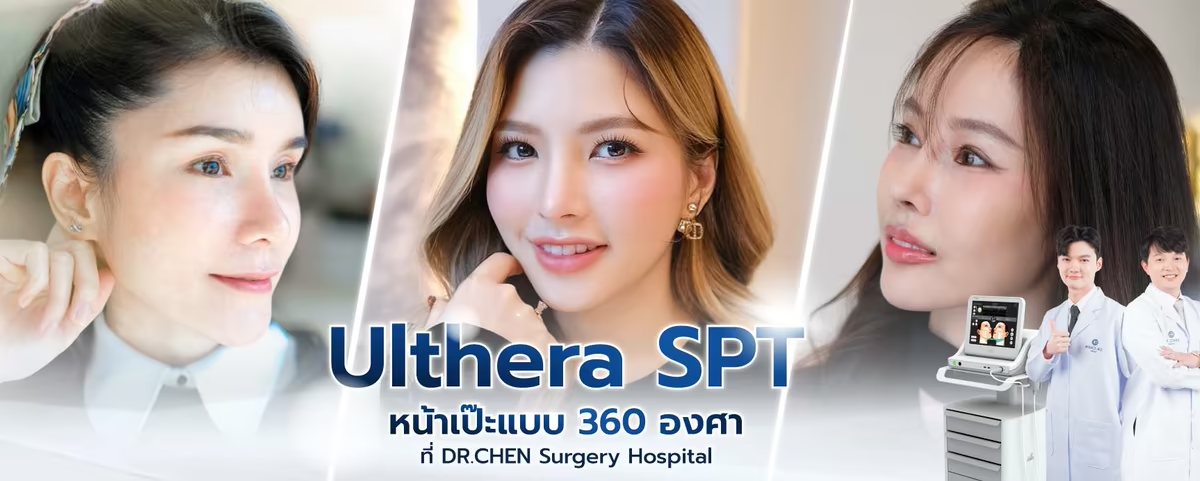
Ulthera – Radiant, Youthful Skin Without Surgery

Ulthera SPT Treatment and Comfort
Ulthera SPT is a non-invasive ultrasound treatment that uses focused energy and real-time imaging. The imaging helps the clinician visualize dermal and subdermal tissue, confirm transducer coupling and plan treatment depth for the selected area. Suitability, comfort and expected changes vary by treatment area and individual assessment. Treatment does not involve surgery. Temporary redness, swelling, pain or altered sensation can occur, and individual recovery and results vary.
Request a ConsultationWhat Ulthera SPT Does
Who May Consider Ultherapy?
How Ultherapy Works and Areas to Discuss
Ultherapy delivers focused ultrasound energy at selected depths. Real-time imaging helps the clinician visualize dermal and subdermal tissue, confirm coupling and avoid bone. U.S. FDA clearance is indication-specific and should not be read as approval for every facial or body area. The appropriate area, device settings and availability in Thailand require clinical assessment.
Ulthera SPT and Other Focused Ultrasound Systems
Devices differ in imaging, approved indications, transducers, treatment protocols and operator training. The appropriate option should be based on the specific device and clinical assessment.
Ulthera SPT With Real-Time Imaging
- Real-time imaging helps the clinician see tissue layers during treatment.
- Treatment depth and transducer choice are planned for the selected area.
- U.S. FDA clearance applies to specific indications, not every possible use.
- Delivery still requires training, assessment and discussion of risks.
Other Focused Ultrasound Systems
- –Imaging capability, indications and treatment depths vary by device.
- –Ask for the exact device name, model and local regulatory status.
- –Protocol and operator training can affect treatment delivery.
- –Results and side effects vary by equipment and individual response.
Why Choose Ultherapy at DCH Hospital?
At DCH Hospital, a clinician reviews the treatment area, skin condition, medical history, device indication and aftercare before recommending Ultherapy. The consultation should also cover alternatives, expected changes, discomfort and possible adverse effects.
Ultherapy is non-surgical, but it is not pain-free or risk-free. Common clinical-trial effects include redness, swelling, pain and temporary nerve effects. Results and recovery vary, so the plan should be individualized and warning signs explained.
Related Articles
Continue with practical guidance about procedures, recovery and planning at DCH Hospital.


