Endoscopic Brow Lift in Bangkok for a Naturally Refreshed Look
An Endoscopic Brow Lift at DCH Hospital Corrects Drooping Brows, Hooded Eyelids, and Forehead Lines from the Root Cause. Powered by Advanced 4K HD Endoscopic Precision, Our Specialist Surgical Team Works Through Tiny Hairline-Concealed Incisions-Minimizing Tissue Trauma and Swelling for Seamless, Natural-Looking Results in a Full Hospital Setting.
Which Upper-Face Concerns Are You Experiencing?
-
Low or Drooping Brows
A reduced distance between the brows and eyes can make the face appear tired, sad or unintentionally stern.
-
Hooded Upper Eyelids
Sagging tissue may cover the upper-eyelid crease, making the crease less visible and eye makeup more difficult to apply.
-
Forehead Lines and Scar Concerns
Forehead lines and deeper frown lines can age the upper face, while concern about visible scars may make surgery feel uncertain.

Why Consider Endoscopic Brow Lift Surgery?
Age-related tissue laxity can lower the brows and outer eye area, narrowing the space between the eyebrows and eyes. This may create a tired or stern expression, and in some people the sagging skin can interfere with the upper visual field. An endoscopic brow lift addresses the supporting structures of the upper face rather than treating only the eyelid skin.
- Elevate the brows and open the eye area: Increase the brow-to-eye distance for a brighter, naturally refreshed appearance.
- Address outer-brow descent and hooded eyelids: Reposition descended tissue to help reveal the natural upper-eyelid crease.
- Soften forehead and frown lines: Smooth the forehead and refresh the upper face without removing excess eyelid skin as the primary approach.
What Causes Drooping Eyebrows?
Drooping brows, outer-eye descent and forehead lines are not caused by ageing alone. Several factors can contribute to changes in upper-face structure.
-

- Ageing: Reduced collagen and elastin can gradually decrease forehead skin elasticity and support.
- Inherited anatomy: Some people naturally have a lower brow ridge or a shorter brow-to-eye distance, which may create a tired appearance.
-
- Repeated facial movement: Frequent frowning, brow raising or forehead tension can contribute to lines and changes in the upper-face tissues over time.
- Environmental and lifestyle factors: Sun exposure, pollution, stress and inadequate rest may accelerate visible skin ageing.
-
- Age-related tissue descent: As support weakens, the weight of forehead and eyelid tissues can pull the brows and outer eye area downward.
- Loss of underlying volume: Age-related volume loss in the forehead and temples can reduce tissue support and contribute to sagging.


Brow Lift Techniques at DCH Hospital

EBL Endoscopic Brow Lift
- Key features
- Uses 4K endoscopic visualization to assist precise work in deeper tissue layers through 3–5 small incisions concealed within the hairline.
- Expected outcome
- Designed to elevate the brows and outer eye area without an overly tight appearance, with recovery depending on the individual.

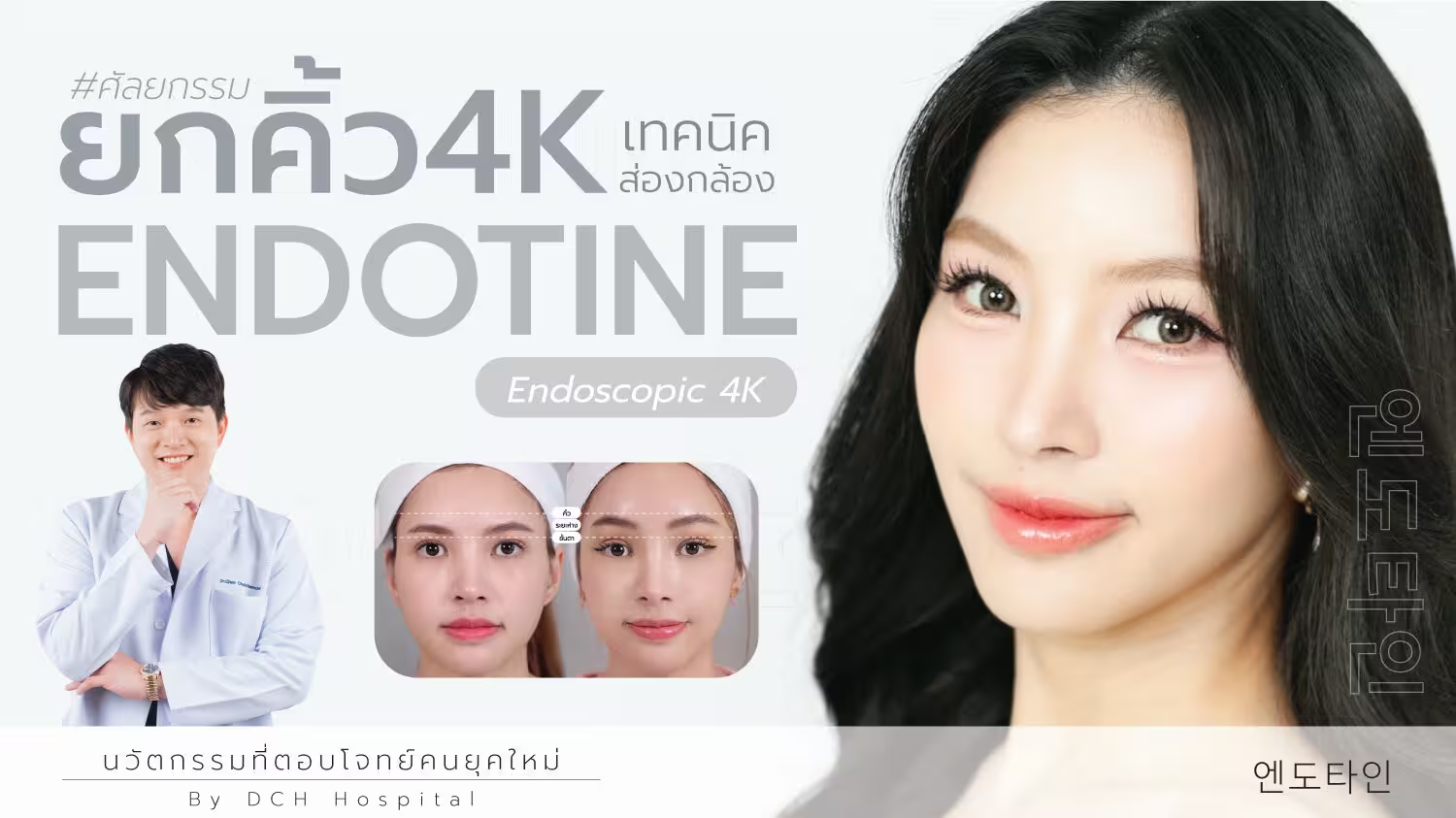
Endotine-Assisted Endoscopic Brow Lift
- Key features
- Uses a bioabsorbable Endotine fixation device to support the repositioned tissues during healing; the device typically dissolves within 6–12 months.
- Expected outcome
- Designed to distribute fixation across the tissue and maintain a natural brow position. Longevity varies with anatomy, ageing and aftercare.

Sub-Brow Lift
- Key features
- Places a small incision close to the lower brow border to remove selected excess skin and fat.
- Expected outcome
- May address hooded upper eyelids while generally preserving the existing brow shape rather than elevating the brow significantly.

Why Choose DCH Hospital for an Endoscopic Brow Lift?
At DCH Hospital, 4K endoscopic visualization assists the surgeon in repositioning the brows, outer eye area and forehead tissues through small hairline incisions. The surgical plan is tailored to your anatomy and aesthetic goals.
- Small, concealed incisions: Typically uses 3–5 small incisions positioned within the hairline, with no planned incision on the central face.
- Recovery-focused technique: Precise tissue handling is intended to limit trauma. Swelling, bruising and recovery time vary between patients.
- Natural-looking lift: The brow angle is planned to suit the face and avoid an excessively raised or surprised appearance.
- Individualised planning: Facial analysis and 3D imaging may be used to support a brow design that complements your proportions.
The Endoscopic Brow Lift Process at DCH Hospital
-
Step 1
Consultation and Facial Assessment
The surgeon assesses the brows, outer eye area and forehead to understand the degree and pattern of tissue descent.
-
Step 2
Individualised Surgical Planning
The brow shape and surgical technique are selected according to facial anatomy, concerns and the surgeon’s assessment.
-
Step 3
3D & CT Assessment
Imaging may be used to assess facial structures and support surgical planning where clinically appropriate.
-
Step 4
Preoperative Preparation
You undergo the required medical assessment and receive individual instructions before surgery in accordance with hospital protocols.
-
Step 5
Endoscopic Surgery
The surgeon uses high-definition 4K endoscopic visualization to assist precise tissue repositioning through small hairline incisions.
-
Step 6
Aftercare and Follow-Up
The aftercare team provides postoperative guidance and scheduled follow-up so recovery can be monitored by the clinical team.


Endoscopic Brow Lift Before and After Results
An endoscopic brow lift is designed to improve brow position, reduce upper-eyelid hooding and create a more open eye area while smoothing the forehead. Incisions are placed within the hairline. Results vary according to anatomy, healing and the surgical plan.


Why Public Figures Trust
DCH Hospital for Endoscopic Brow Lift
Watch experiences shared by public figures who chose DCH Hospital for their care. These individual stories illustrate different treatment journeys; outcomes vary from person to person.
Endoscopic Brow Lift FAQs
The procedure is performed under general anaesthesia managed by an anaesthesia specialist, so you should not feel pain during surgery. Mild forehead tightness can occur during the first 1–3 days and is usually managed with medication prescribed by your doctor.
The procedure typically uses 3–5 small incisions concealed within the hairline, with no planned incision on the central face. Scar visibility varies with healing and individual factors.
Many patients plan for several days of initial recovery. Swelling and bruising gradually improve, and some return to routine work within about one week. Your surgeon will advise you based on your procedure and progress.
Results may remain noticeable for approximately 5–10 years, although ageing continues. Longevity varies with skin quality, anatomy, lifestyle and aftercare.
The brow can initially appear slightly higher or tighter while swelling is present. As healing progresses over the following weeks, the position generally settles. The planned brow angle is tailored to your facial proportions.
Patients may be advised to wash their hair gently after 2–3 days and dry the incision area carefully. Suture removal is commonly scheduled around 7–14 days, depending on the surgeon’s instructions.
Follow the clinical team’s instructions, which may include cold compresses during the first 1–3 days, sleeping with your head elevated, avoiding prolonged bending, taking prescribed medication and keeping the hairline incisions clean.
Avoid alcohol and smoking for the period advised by your surgeon. Do not rub the eyes or apply strong pressure or massage to the forehead during early healing. Follow the personalised restrictions provided by the clinical team.
An endoscopic brow lift repositions tissues across the forehead, brows and outer eye area. Double-eyelid surgery focuses on the eyelid crease. The appropriate procedure depends on whether the concern originates mainly from the brow, eyelid or both.
It may be possible. A brow lift can address recurrent upper-face descent and may help reveal the existing eyelid crease without revising the eyelid incision. A surgeon must assess previous surgery, scar tissue and current anatomy.