Breast Augmentation Surgery in Bangkok
International patients considering breast augmentation in Bangkok can receive first-time augmentation or revision surgery at DCH Hospital. Your surgical plan is tailored to your anatomy, preferences and desired proportions, with the aim of achieving a soft, balanced and natural-looking result. Surgery takes place in a hospital operating room with continuous monitoring by an anesthesiologist.
Which Breast Concerns Apply to You?
-
You would like more volume but are unsure which implant shape or size best suits your body.
-
You have breast asymmetry, sagging, or concerns related to a previous augmentation.
-
You want a fuller shape but are concerned about firmness, visible implant edges, or an unnatural look.
Which breast implant shape is right for you?

Round Breast Implant
May suit patients who prefer fuller upper-breast volume and more defined cleavage. The shape tends to remain evenly full in different body positions.

Teardrop Breast Implant
Often considered by petite patients or those with limited breast tissue who prefer a gentle upper slope and a natural-looking contour.
Which breast implant surface may suit you?

Smooth Surface
Designed for a soft feel and natural movement. Because a smooth implant adheres less to surrounding tissue, the surgeon will also discuss positioning and capsular contracture considerations.
Textured Surface
Its textured shell is designed to grip surrounding tissue and help maintain position. It generally feels firmer and holds its shape more than a smooth-surface implant.
Nano-Textured Surface
Combines a fine surface texture with high flexibility for a soft, natural feel. The final choice should be based on your anatomy, goals and the surgeon’s assessment.
Which Implant Placement Is Right for You?

Subglandular Placement
May suit: Patients with sufficient breast tissue who want a modest increase in volume.
Advantages: Usually less postoperative discomfort, a shorter initial recovery and fuller projection.
Considerations: Implant edges may be more visible, and the long-term risk of capsular contracture should be discussed with the surgeon.

Submuscular Placement
May suit: Petite patients or those with thin breast tissue who need greater implant coverage.
Advantages: Better coverage can help soften visible edges and create a natural-looking contour.
Considerations: Recovery can be more uncomfortable, and implant-size options may be more limited for some patients.

Dual-Plane Placement
May suit: Patients seeking a gentle upper slope, natural-looking movement and a softer lower-breast contour.
Advantages: Combines upper-pole muscle coverage with greater flexibility in the lower breast, allowing the plan to be tailored to the patient.
Considerations: This is an advanced technique and should be planned and performed by an experienced surgical team.
Which breast implant brand may suit you?

Mentor (United States)
Mentor Smooth Profile Gel
May suit: Patients who prefer a fuller breast shape with more defined projection.
Features: Available in smooth and textured options, with a cohesive gel designed to support shape and projection.
Mentor MemoryGel Xtra
May suit: Patients with limited breast tissue or those seeking a smooth, natural-looking contour.
Features: A highly filled cohesive gel and flexible shell designed to improve coverage and reduce visible implant edges.

Motiva (Costa Rica)
Motiva Silk
May suit: Patients who prefer a soft, natural feel and a postoperative plan that does not require routine massage.
Features: A fine surface designed to reduce tissue irritation and support predictable healing around the implant.
Motiva Ergonomix
May suit: Patients who want the breast contour to adapt naturally with changes in body position.
Features: A highly flexible gel designed to form a gentle teardrop contour while standing and spread more evenly when lying down, with product-identification technology.
Motiva JOY
May suit: Patients seeking a newer-generation implant with an especially soft and flexible feel.
Features: True Monobloc+ construction integrates the shell and gel, with a multilayer barrier designed for durability and reduced friction.

Preview Your Options with 3D Body Scan
A three-dimensional body assessment and simulation can help you and your surgeon compare implant sizes and shapes in relation to your proportions.
- Detailed proportion analysisVisualizes structural differences and overall body balance.
- Compare options more easilyReview simulated sizes and shapes before deciding with your surgeon.
- Personalized planningUse the scan as part of your consultation to plan a shape aligned with your goals.
Why Choose DCH Hospital?
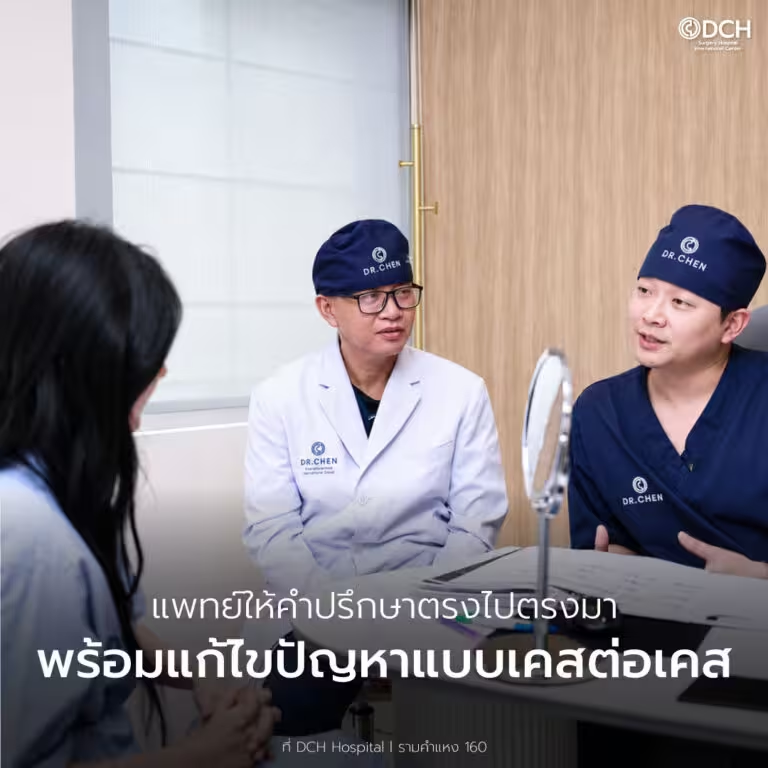
Clear, Patient-Centered Consultation
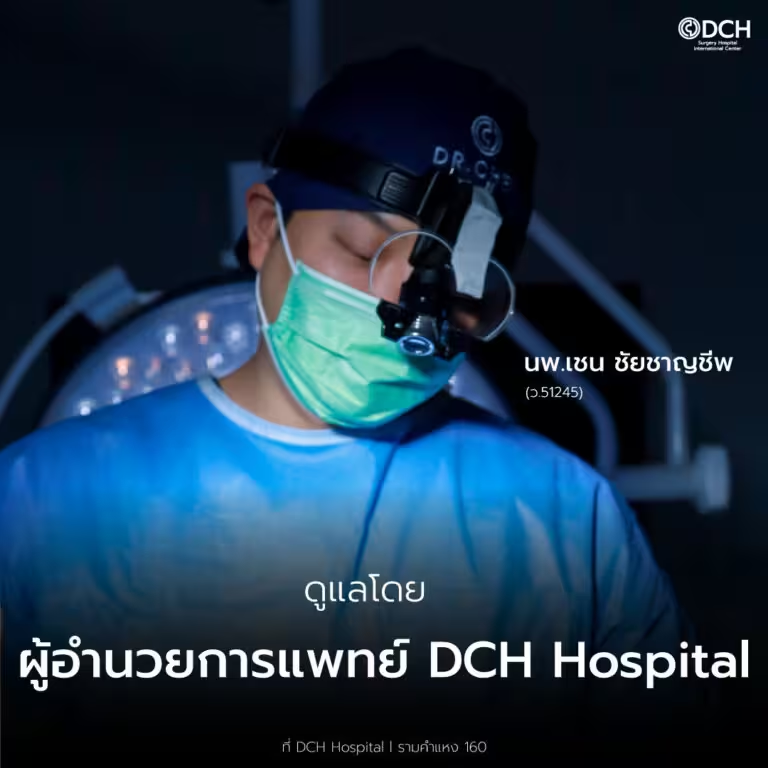
Your surgeon assesses your anatomy and plans the procedure individually, with a clear discussion of suitable options and limitations.
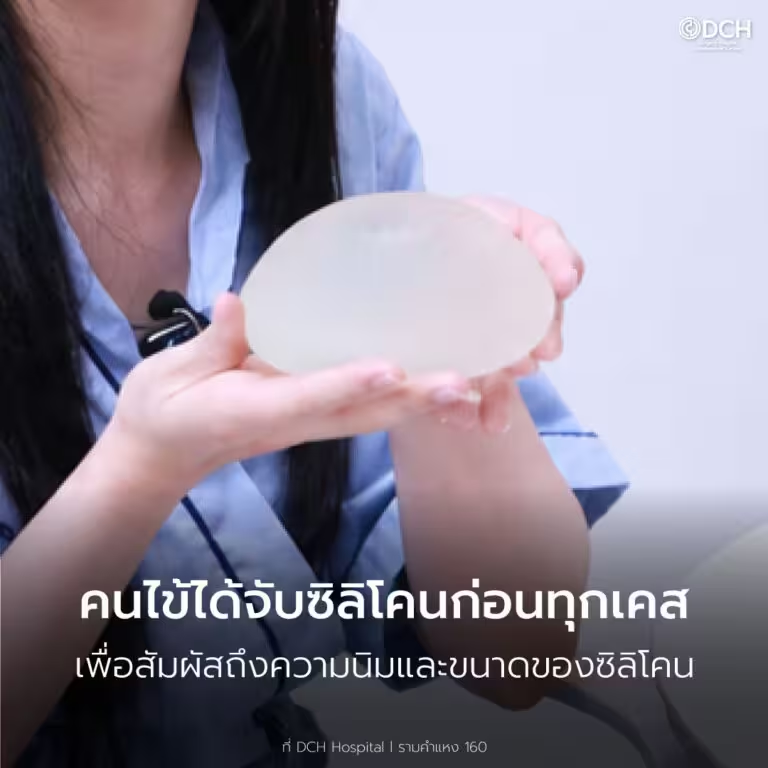
Compare Implants Before Surgery
You can handle implant samples during consultation to compare sizes, profiles and softness before making a decision.
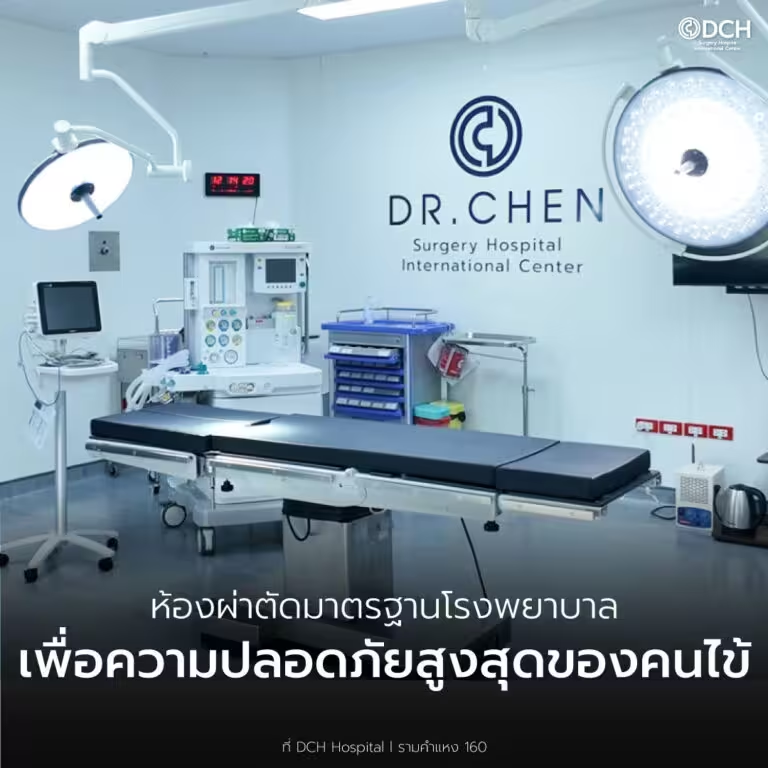
Hospital Operating Room
Surgery is performed in a hospital operating room that follows established cleanliness and safety protocols, with continuous patient monitoring during the procedure.

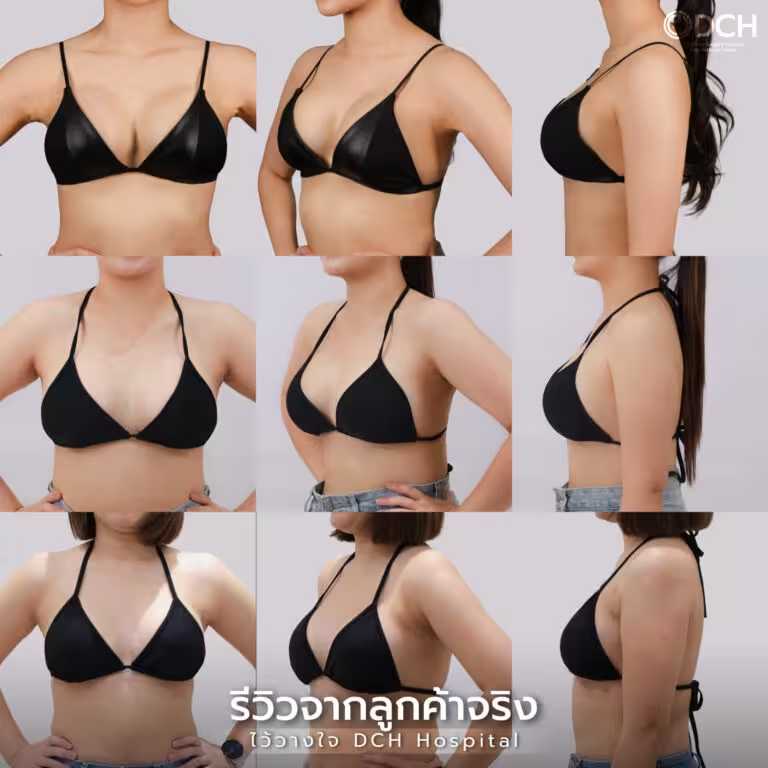
Patient Stories and Results
Photos and videos shared by patients following breast augmentation surgery at DCH Hospital.


Breast Augmentation Surgery: What to Know
Before deciding on breast augmentation surgery, it is important to understand implant shapes, surfaces and placement techniques. Your choice affects body proportions, surgical planning, recovery and long-term care. At DCH Hospital, the consultation focuses on matching these options to your anatomy, goals and lifestyle.
Specialist Medical Team at DCH Hospital
Our medical team provides individualized assessment and close care at every stage, with patient safety and balanced results as priorities.
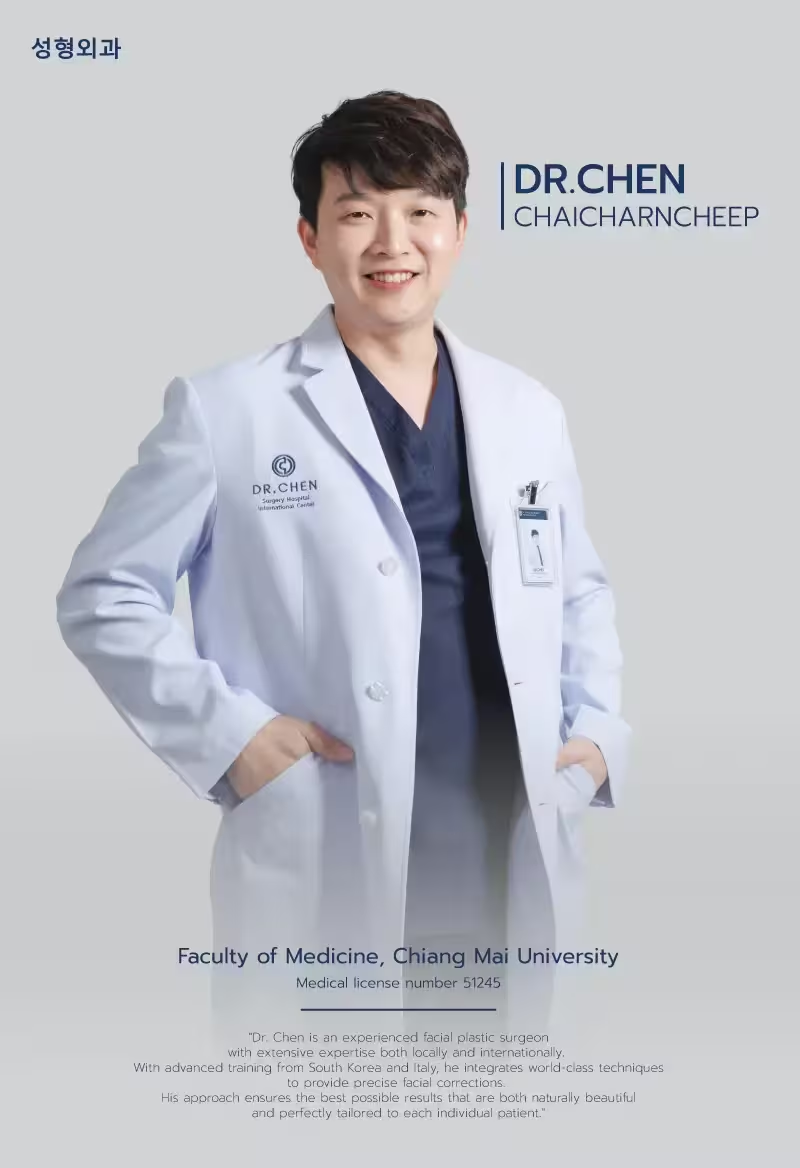
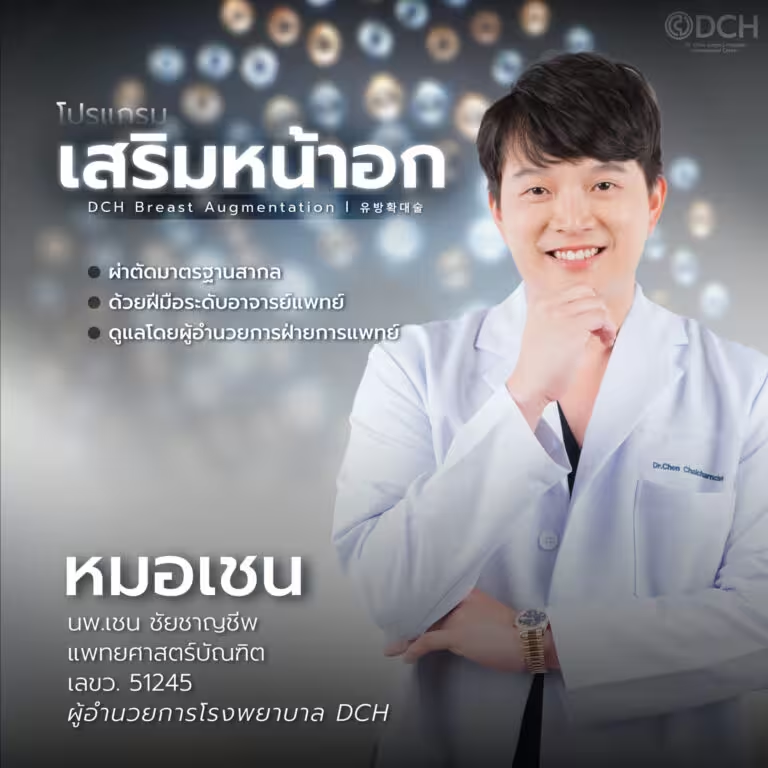
Dr. Chen Chaicharncheep
Dr. Chen Chaicharncheep specializes in facial aesthetic surgery and has experience in Thailand and abroad. His approach combines detailed facial planning with training undertaken in South Korea and Italy, adapting international techniques to each patient with an emphasis on natural-looking, balanced results.
Education
- Faculty of Medicine, Chiang Mai University
- Medical License No. 51245
Board-Certified Specialty
- Orthopedics (Medical Council of Thailand)
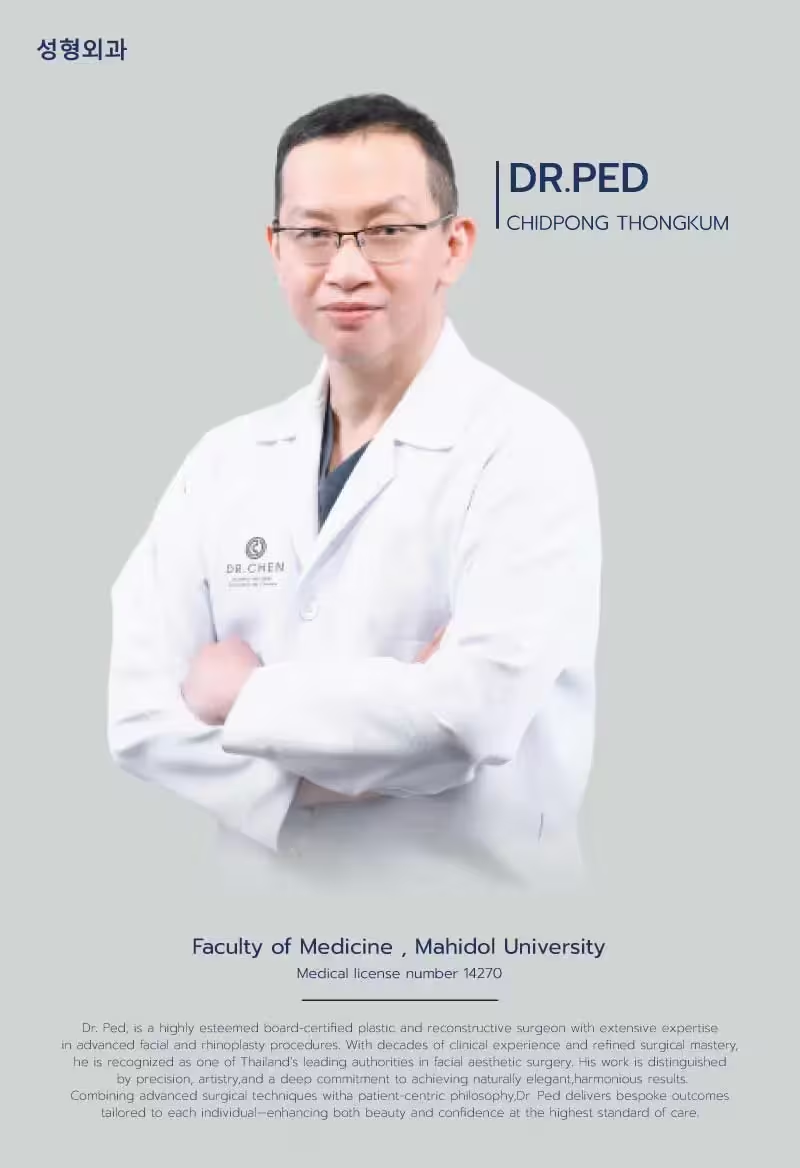
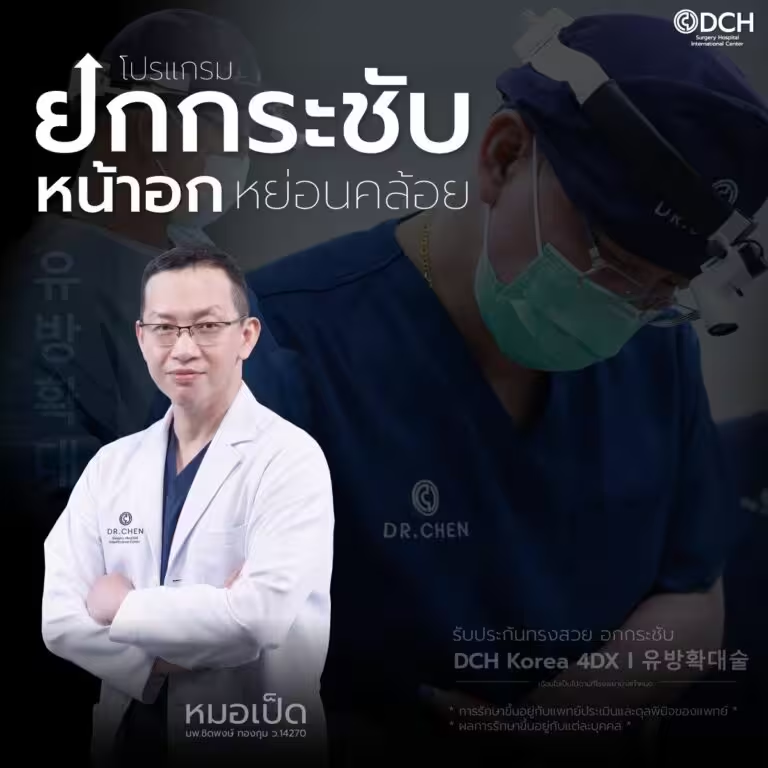
Dr. Chidpong Thongkum (Dr. Ped)
Dr. Chidpong Thongkum is a specialist in plastic and reconstructive surgery with extensive experience in facial and nasal procedures. He is known for advanced surgical technique, careful planning and a commitment to natural-looking results tailored to each patient.
Education
- Doctor of Medicine, Mahidol University (Phramongkutklao College of Medicine, Royal Thai Army Medical Department)
- Diploma of the Thai Board of Otolaryngology (No. 6529/2536)
- Medical License No. 14270
Areas of Expertise
- Facelift Surgery
- Breast Augmentation Surgery
- Rhinoplasty
- Endoscopic Brow Lift
- Abdominoplasty
Board-Certified Fields
- Family Medicine
- Otolaryngology
- Facial Plastic and Reconstructive Surgery
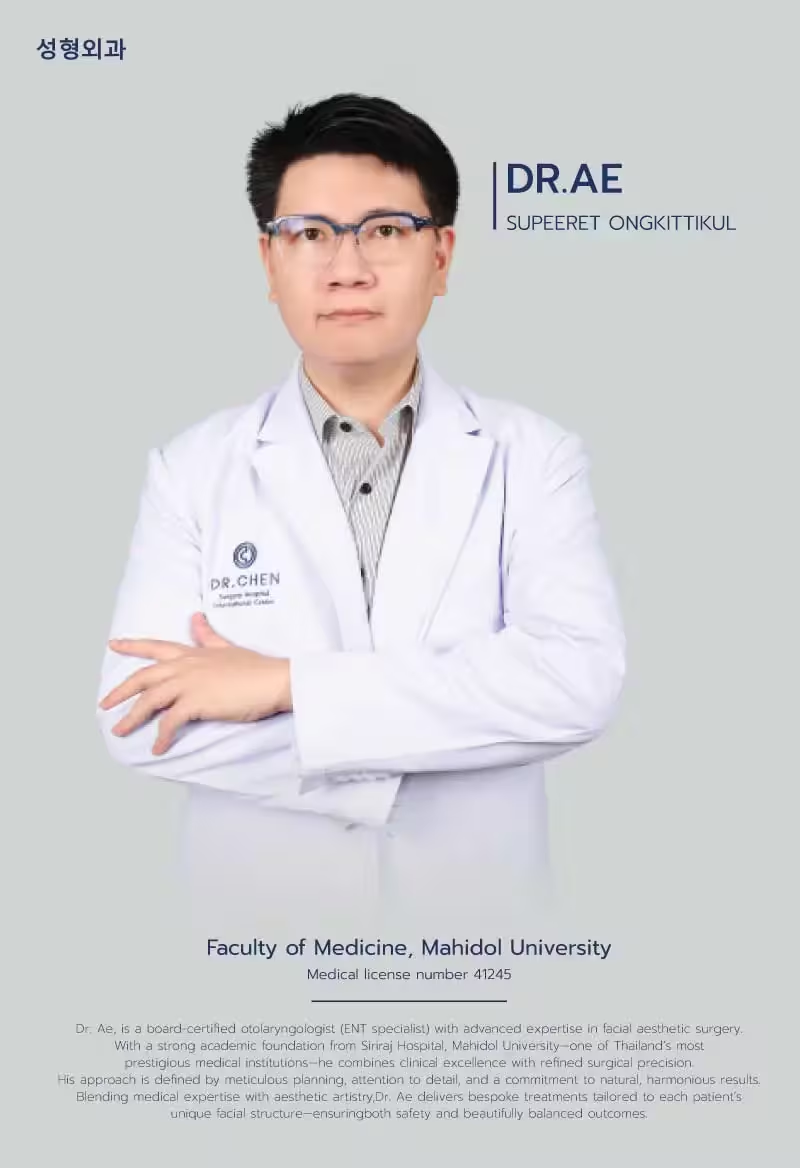
Dr. Supeeret Ongkittikul (Dr. Ae)
Dr. Supeeret Ongkittikul specializes in otolaryngology and facial aesthetic surgery. His work emphasizes detailed planning, precision and natural-looking results that balance medical knowledge with aesthetic considerations.
Education
- Doctor of Medicine, Faculty of Medicine Siriraj Hospital, Mahidol University, 2012
- Diploma of the Thai Board of Otolaryngology, 2018
Aesthetic and Reconstructive Surgery Expertise
- Rhinoplasty
- Eyelid Surgery
- Endoscopic Brow Lift
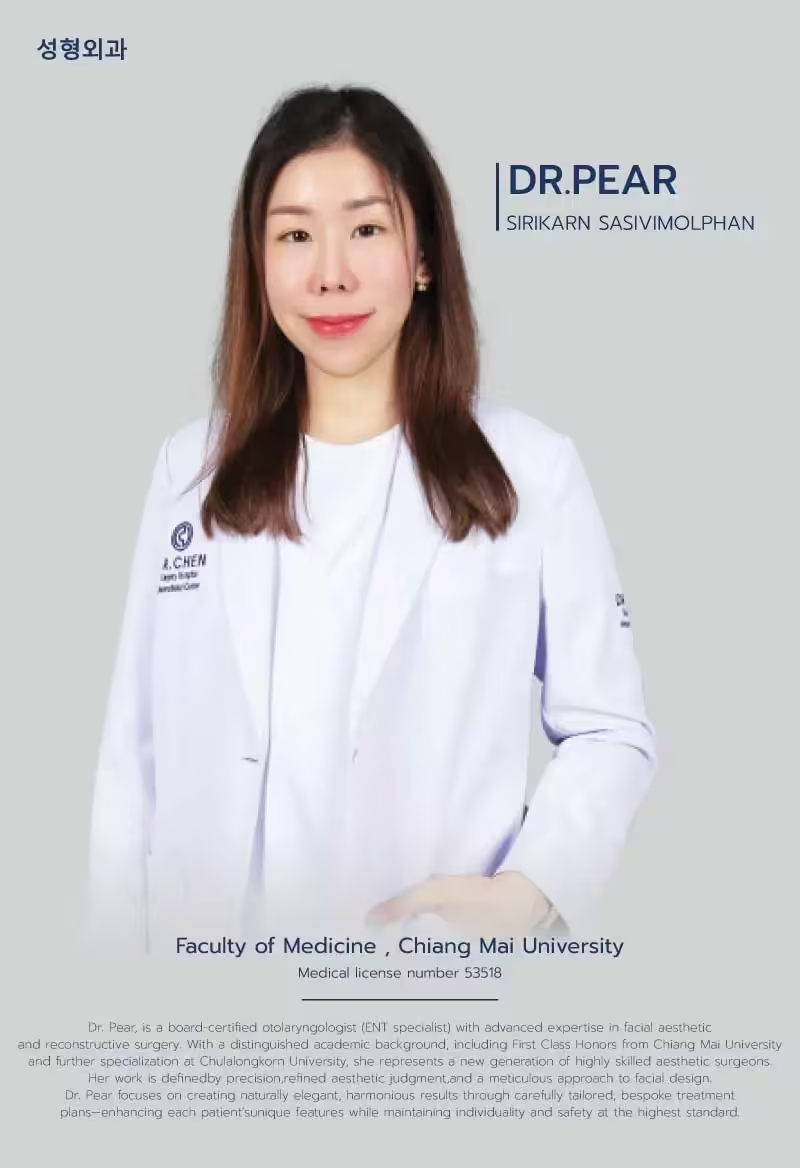
Dr. Sirikarn Sasivimolphan (Dr. Pear)
Dr. Sirikarn Sasivimolphan specializes in otolaryngology and facial aesthetic surgery. Her academic background and precise surgical planning support natural-looking results tailored to the individual patient.
Education
- Doctor of Medicine, First-Class Honors, Chiang Mai University
- Diploma of the Thai Board of Otolaryngology, Chulalongkorn University
Aesthetic and Reconstructive Surgery Expertise
- Rhinoplasty
- Eyelid Surgery
- Endoscopic Brow Lift
Board-Certified Specialty
- Otolaryngology (Medical Council of Thailand)
Training and Professional Experience
- Surgical skills development program, Queen Savang Vadhana Memorial Hospital
- Otolaryngologist, Queen Savang Vadhana Memorial Hospital
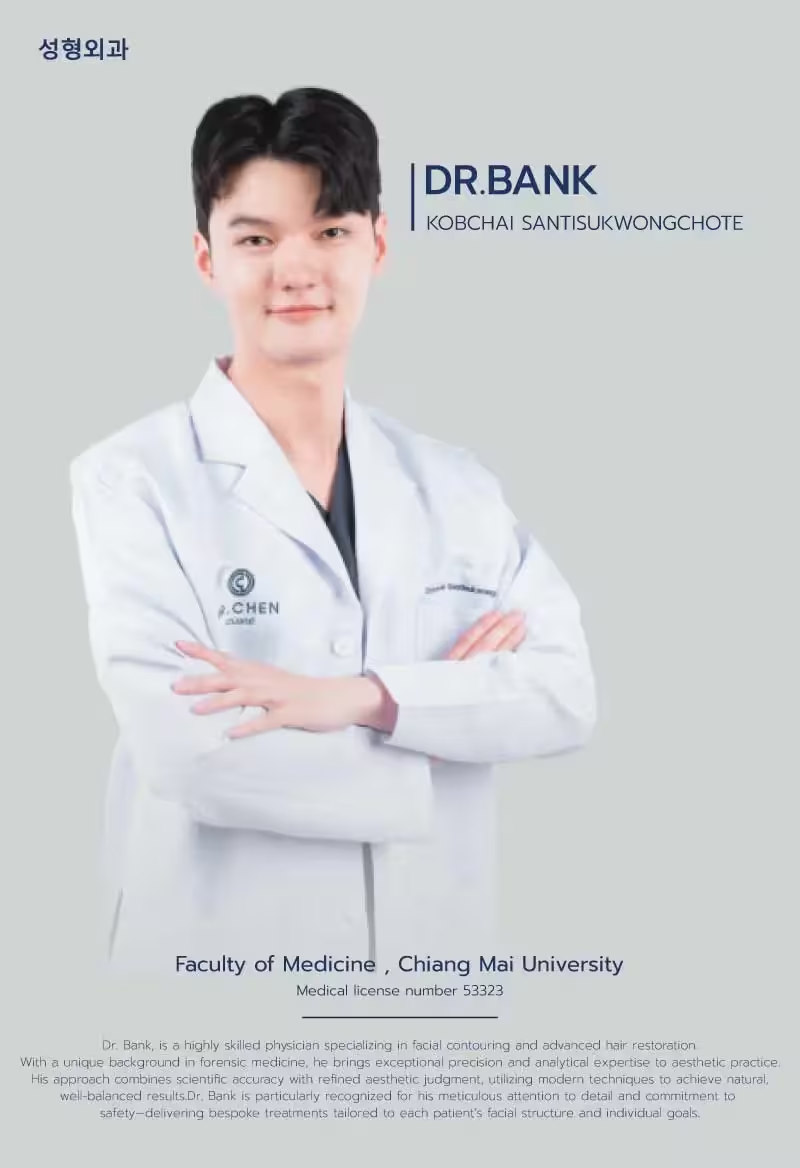
Dr. Kobchai Santisukwongchote (Dr. Bank)
Dr. Kobchai Santisukwongchote specializes in facial contouring and hair transplantation. His background in forensic medicine and aesthetic procedures supports a precise, modern approach focused on safety and natural-looking results.
Education
- Faculty of Medicine, Chiang Mai University
- Medical License No. 53323
Aesthetic and Reconstructive Surgery Expertise
- Dermatology and Facial Contouring
- Hair Transplantation and Hair Care
Board-Certified Specialty
- Forensic Medicine (Medical Council of Thailand)
Training and Certificates
- Hair-transplantation technique training, Pavicon Mediness Academy
- Hands-on filler-injection training, including Belotero Lips, Switzerland
- Advanced Belotero filler-injection training by Merz Aesthetics, Switzerland
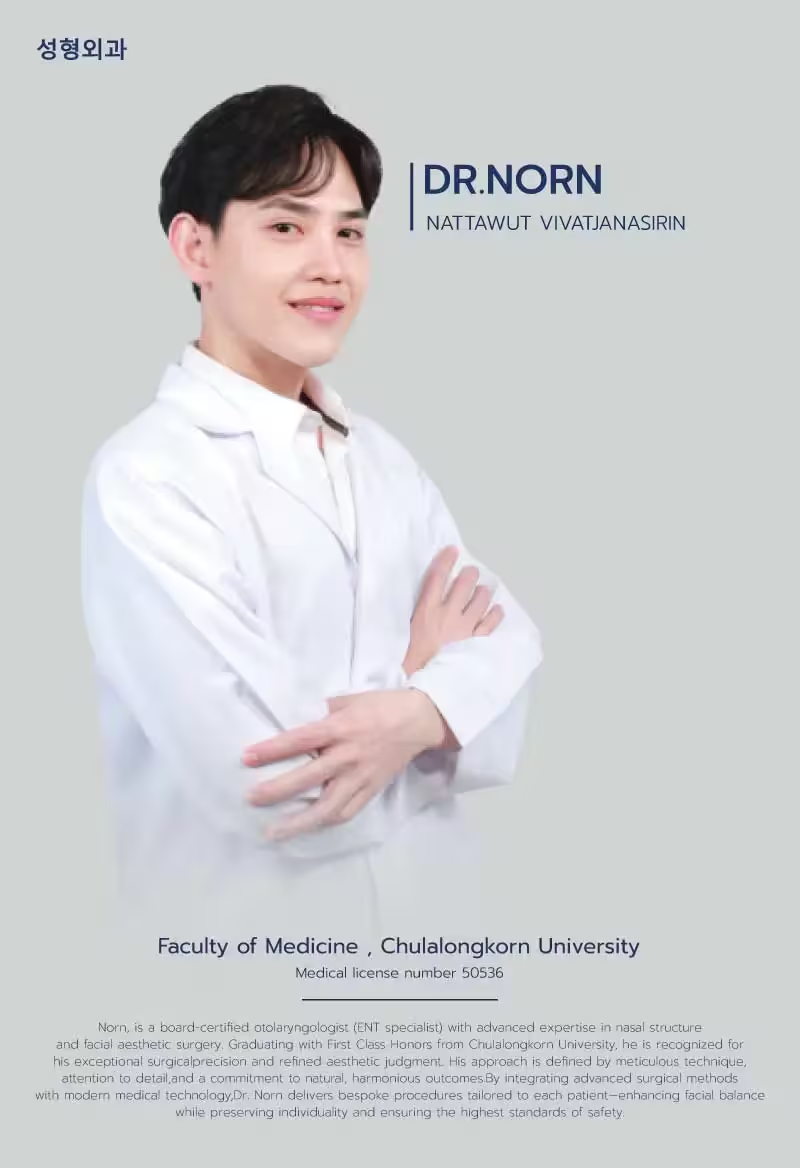
Dr. Nattawut Vivatjanasirin (Dr. Norn)
Dr. Nattawut Vivatjanasirin specializes in structural rhinoplasty and facial surgery. He combines detailed surgical technique with current medical technology to pursue refined, balanced and natural-looking results.
Education
- Doctor of Medicine, First-Class Honors, Chulalongkorn University
- Medical License No. 50536
Aesthetic and Reconstructive Surgery Expertise
- Facelift Surgery
- Rhinoplasty
- Endoscopic Brow Lift
- Forehead Contouring Surgery
Board-Certified Specialty
- Otolaryngology (Medical Council of Thailand)
Breast Augmentation Surgery FAQs
Guidance on preparation, surgery, recovery and postoperative care for breast augmentation patients.
Your surgical team may provide instructions such as the following:
- Do not eat or drink for at least 6–8 hours before surgery, or as instructed by your anesthesiologist.
- Discuss all medicines, vitamins and supplements with your doctor; you may be asked to stop products that affect blood clotting at least two weeks beforehand.
- Avoid smoking and alcohol for at least two weeks to support wound healing.
- Bring loose, front-fastening clothing that is easy to put on after surgery.
Care is organized step by step so that you know what to expect:
- Meet the specialist medical team for an anatomical assessment and 3D Body Scan simulation.
- Complete the required physical examination and blood tests before surgery.
- Receive case-specific anesthesia care and monitoring from an anesthesiologist.
- Undergo surgery in a hospital operating room with monitoring by the medical team.
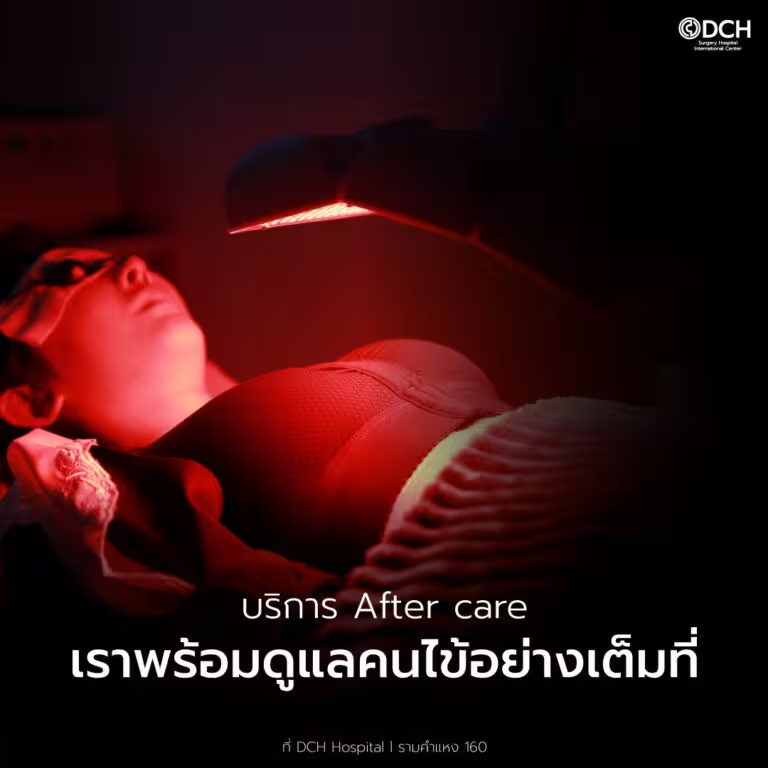
- Continue postoperative follow-up through the After Care program.
Follow your surgeon’s individualized instructions. General guidance may include:
- Wear the recommended support bra as directed, often throughout the first month.
- Sleep on your back with your upper body elevated during the first 1–2 weeks to help reduce swelling.
- Take prescribed medicines exactly as directed.
- Keep the incision clean and dry, and do not wet it until your medical team confirms that it is safe.
Temporary postoperative effects often improve gradually, but contact the hospital if symptoms are severe or worsening.
- Tightness, pressure or soreness around the breasts may occur during the first 3–5 days and can usually be managed with prescribed pain medicine.
- Temporary numbness of the nipple or surrounding skin can occur as tissues swell and may gradually improve over several months.
- Bruising and swelling commonly fade over approximately 2–4 weeks.
To protect the incision and allow the implants to settle, your surgeon may ask you to avoid the following:
- Avoid heavy lifting and strenuous chest exercise during the first month.
- Keep the incision dry until suture removal or until your medical team permits otherwise.
- Avoid alcohol and smoking for at least four weeks because they can delay healing.
- Avoid sleeping face down or placing pressure on the breasts for the first 1–2 months.
All surgery carries risks, which your surgeon will explain during consultation. At DCH Hospital, breast surgery is planned by the medical team, performed in a hospital operating room and closely monitored throughout. Only internationally recognized implants registered with the Thai FDA are used.
Many patients rest fully for the first 3–5 days and then gradually return to light work and daily activities. Strenuous exercise is commonly delayed for about 4–6 weeks, subject to the surgeon’s assessment.
The breasts often begin to settle and feel softer over approximately 3–6 months. During the first 1–3 months, surrounding tissue may still feel tight as healing progresses. Timing varies by patient and surgical plan.
You can check the following three points:
- The implant packaging should be sealed and opened in front of you on the day of surgery.
- You should receive the implant box, warranty documentation and serial-number labels.
- The serial number can be verified directly with the authorized importer or manufacturer to confirm authenticity.
Many patients can become pregnant and breastfeed after augmentation because implants are placed behind breast tissue or muscle rather than inside the milk ducts. However, breastfeeding ability can vary, so discuss future pregnancy plans with your surgeon.
Two common incision locations may be considered according to your anatomy and surgical assessment:
- Inframammary fold: The incision is positioned in the crease beneath the breast, allowing controlled implant placement and concealment beneath the bra line.
- Underarm: The incision is concealed in a natural axillary fold and may suit patients who prefer no incision on the breast.
- Incision length: It is commonly around 3–4 centimeters, depending on implant size, type and the surgical plan.
Risk-reduction measures begin with implant selection, surgical technique and postoperative care:
- Use authentic, appropriately registered implants that meet applicable standards.
- Careful surgical technique helps minimize tissue trauma and bleeding around the implant pocket.
- Follow postoperative instructions carefully, including support-bra use and incision care to reduce infection risk.