
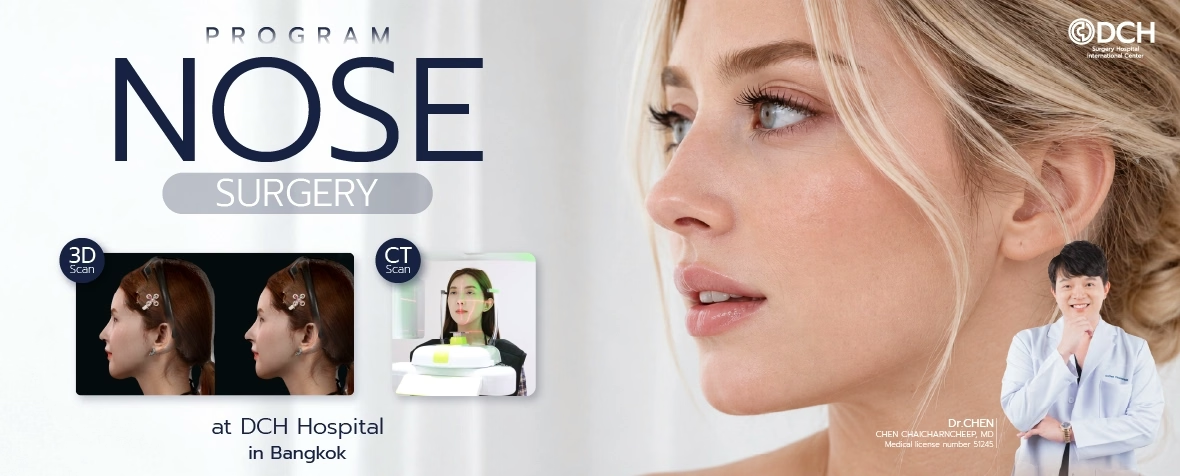
Nose Surgery At DCH Hospital In Bangkok

Nose Surgery in Bangkok

Nose Surgery, Also Called Rhinoplasty, Can Change The Shape Or Support Of The Nose. Planning Should Consider Facial Balance, Nasal Breathing And Your Individual Anatomy. At DCH Hospital In Bangkok, A Consultation Is The Starting Point For Discussing Your Concerns, Comparing Surgical Options And Understanding Recovery, Risks And The Limits Of What Surgery Can Achieve.

What Can Nose Surgery Address?

A Good Starting Point Is Understanding What You Would Like To Change. Your Consultation Brings Together Your Appearance Goals, Breathing Concerns And Any Previous Treatment.

Beer The Voice In A Three-Quarter Portrait From DCH Hospital

Shape And Proportion

Discuss Your Bridge, Tip Or Nasal Width In Relation To Your Other Facial Features. Your Skin, Bone And Cartilage Help Determine Which Changes Are Realistic.

Breathing And Structure

Share Any Nasal Blockage, Breathing Difficulties Or Previous Injury. The Cause Needs Assessment, As Cosmetic Reshaping Alone Does Not Treat Every Breathing Problem.

Previous Nose Surgery

Shape Changes, Implant Concerns Or Persistent Symptoms After Surgery May Need A Revision Assessment. Bring Previous Operation Details; Scar Tissue And Remaining Nasal Support Can Affect The Plan.

Is Rhinoplasty Right For You?

The Right Plan Starts With Your Goals And A Careful Assessment. Your Surgeon Considers Your Health, Nasal Structure And Expectations To Help You Decide Whether Surgery Is Appropriate.

Start With Your Goals

Think About The Changes That Matter To You And Why You Want Them. Reference Photos Can Help Explain Your Preferences, But Your Plan Should Reflect Your Own Features.

Take Time To Understand The Options, Recovery And Risks. You May Decide To Proceed, Wait Or Have No Treatment. The Decision Should Be Yours, Without Pressure From Others.

Your Health

Discuss Medical Conditions, Medicines, Allergies, Previous Procedures And Smoking Or Nicotine Use. Your Surgeon Will Assess Whether You Are Fit For Surgery Or Need Further Checks First.

Nasal Structure

Facial Growth, Skin, Cartilage And Nasal Support Influence What Can Be Changed. Breathing Concerns And Previous Surgery Also Need Individual Assessment.

Realistic Results

Discuss What Is Achievable For Your Nose. Surgery Cannot Guarantee Perfect Symmetry Or Reproduce Another Person’s Features. Ask Whether Another Treatment Could Address Your Goals And What Its Limits Are.

Rhinoplasty Options Explained

Open And Closed Rhinoplasty Describe How The Surgeon Reaches The Nasal Framework. Cartilage Grafts And Implants Are Separate Choices About Shape And Support. Your Plan Should Explain Both.

What To CompareClosed RhinoplastyOpen Rhinoplasty
Incision Placement

Incisions Are Made Inside The Nostrils To Reach The Bone And Cartilage Beneath The Skin.

Internal Incisions Are Joined By A Small Incision Across The Columella, The Strip Of Tissue Between The Nostrils.

Surgical Access

The Surgeon Works Through Internal Openings. Suitability Depends On Whether This Provides Enough Access For The Planned Changes.

The Skin Is Lifted To Give More Direct Access To The Nasal Framework. The External Incision Leaves A Scar That Changes As It Heals.

Discuss Your Plan

Ask Which Changes Can Be Made Through This Approach And Whether Any Additional Incisions Or Grafts Are Needed.

Ask Why The Additional Access Is Recommended For Your Nose, Where Scars Will Be And How They Should Be Cared For.

Support And Materials

Cartilage Grafts. Tissue From The Septum, Ear Or Rib May Help Reshape Or Support The Nose. The Source Depends On What Is Needed And What Is Available.

Implants. An Implant May Be Discussed In Some Plans. Ask About The Proposed Material, Its Benefits And Risks, And Why It Is Recommended. Your Own Cartilage Also Has Risks.

Technique Names Alone Do Not Describe The Whole Operation. If You Are Offered A Semi-Open Or Branded Approach, Ask For The Exact Incisions, Materials And Changes Included In Your Plan.

When Revision Surgery Is Considered

If You Have Had Nose Surgery Before, A Fresh Assessment Helps Clarify Your Concerns, The Support That Remains And What Further Treatment May Achieve.

Understand What Has Changed

Your Surgeon Reviews The Shape, Skin, Scar Tissue And Breathing, Alongside Any Existing Implant Or Graft. Previous Surgery Can Limit The Available Cartilage And The Changes That Are Possible.

Bring Your Surgical History

Bring Previous Operation Dates, Surgical Records And Implant Or Graft Details, If Available. Explain Any Changes In Shape, Breathing, Sensation Or Skin, Including When They Began.

Allow Time For Healing

Elective Revision Usually Requires Time For Swelling To Settle And Tissues To Heal. Your Surgeon Should Assess Readiness Individually And Explain The Benefits, Risks And Limits Of Another Operation.

Seek Earlier Assessment For Suspected Infection, Exposed Implant Material Or Worsening Skin Problems. These Concerns Need Prompt Review Rather Than Waiting For A Routine Revision Appointment.

Golf In A Portrait From A DCH Revision Rhinoplasty Article

Planning Your Surgery At DCH

A Consultation Connects Your Goals With A Practical Surgical Plan. It Should Also Give You Time To Ask Questions And Decide Whether You Want To Proceed.

Nose Surgery Consultation With A Doctor At DCH Hospital

Discuss Your Priorities

Review Your Nasal Shape, Skin, Previous Treatments And Breathing Concerns. Ask Which Changes Are Feasible And Which Features May Remain.

Understand Any 3D Preview

DCH Uses 3D Facial Scanning In Consultation Planning. A Simulation Can Help Explain Proposed Changes, But It Is A Planning Aid And Does Not Predict Or Guarantee Your Final Result.

Confirm Your Care Plan

Ask Who Will Perform The Surgery, What Anesthesia Is Planned, How Follow-Up Works And Whom To Contact If A Problem Develops.

Preparing For Nose Surgery

Good Preparation Starts With Clear Instructions And Practical Support. Ask Your Treating Team For A Written Plan Based On Your Procedure And Health, And Clarify Anything You Are Unsure About Before Surgery.

Confirm With Your Team

  • Medicines And HealthShare Your Medicines, Supplements, Allergies And Medical Conditions. Change Prescribed Medicines Only On Your Clinician’s Advice.
  • Smoking And NicotineTell The Team About Smoking, Vaping And Other Nicotine Use. Follow Their Instructions About Nicotine And Alcohol Before Surgery.
  • Fasting InstructionsConfirm When To Stop Eating And Drinking, And Which Medicines To Take On The Day. Follow Your Anesthesia Team’s Specific Instructions.

Arrange Your Support

  • Travel After SurgeryArrange For Someone To Take You Home Or To Your Accommodation After Discharge.
  • Help During Early RecoveryPlan For Someone To Stay With You For The First Night, And Discuss Whether You Will Need Help For Longer.
  • Follow-Up And ContactsKeep Your Review Dates, Written Care Instructions And The Team’s Contact Details Together So They Are Easy To Find.

Your Nose Surgery Journey

The Details Depend On Your Agreed Procedure. Your Team Should Explain Each Stage Before Surgery.

Before Surgery

Your Team Confirms Your Health, Consent, Surgical Plan And Anesthesia Arrangements.

Use This Time To Raise Questions About The Proposed Changes And Recovery Instructions.

During Surgery

The Surgeon Reshapes Or Supports The Nasal Framework According To Your Plan.

This May Involve Bone, Cartilage Or An Implant. The Anesthesia Team Monitors You Throughout The Procedure.

After Surgery

You Are Monitored During Early Recovery Before Discharge Is Considered.

A Splint, Dressings Or Internal Support May Be Used. Your Team Explains Their Care And Any Planned Removal.

Recovery And Follow-Up

Early Recovery And Final Settling Are Different Stages. Swelling, Bruising, Nasal Stuffiness And Temporary Changes In Sensation May Occur.
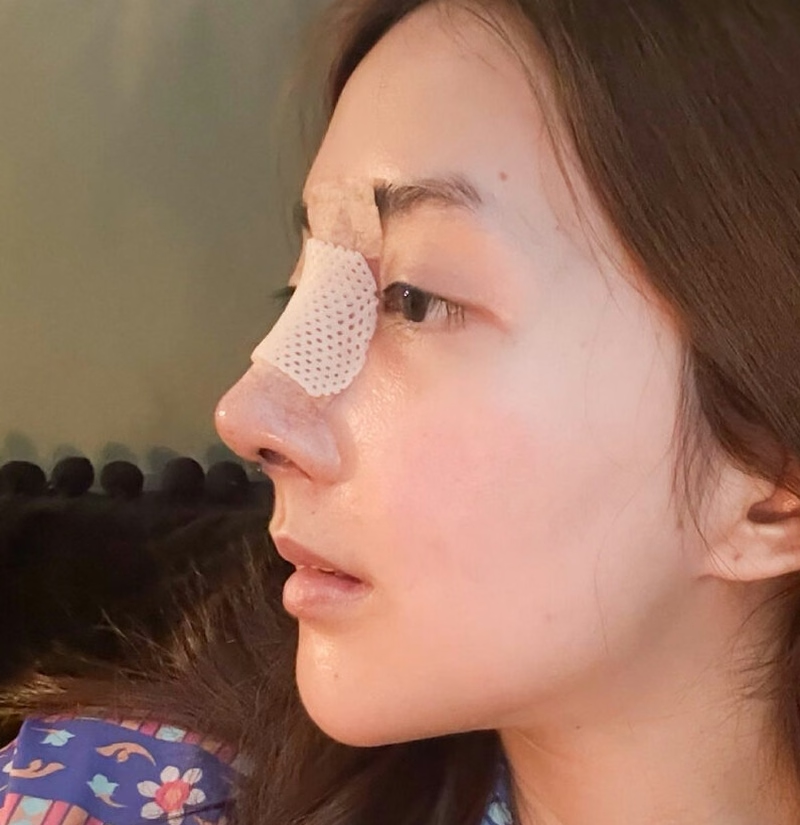
Beer The Voice With Nasal Tape During Early Recovery After Nose Surgery

Early Recovery

Follow Your Team’s Instructions For Wound Care, Medicines, Head Position And Protecting Your Nose From Pressure. Ask Before Returning To Work, Exercise Or Wearing Glasses That Rest On The Nose.

Ongoing Healing

Initial Swelling Often Improves Over The First Few Weeks. The Nasal Contour Can Continue To Refine For Up To A Year. Your Procedure And Individual Healing Affect The Timeline.

Follow-Up Visits

Attend Planned Reviews So Your Surgeon Can Assess Healing And Any Breathing Or Shape Concerns. Confirm How Care Will Continue If You Return Home.

Risks, Scars And Expected Results

Understand The Risks, Possible Scars And Limits Of Surgery Before You Decide. Your Surgeon Should Explain How Each Applies To Your Individual Plan.

Understand The Risks

Risks Include Bleeding, Infection, Poor Healing, Altered Sensation Or Breathing, Asymmetry And A Hole In The Nasal Septum. Discuss Implant, Graft And Anesthesia Risks, Including Any Donor-Site Risks.

Know Where Scars May Be

Scars Depend On The Incisions. Open Rhinoplasty Leaves A Scar Between The Nostrils; Cartilage Donor Sites May Leave Others. Ask Where Scars Will Be And How To Care For Them.

Keep Expectations Realistic

Surgery May Improve Shape Or Support, But Perfect Symmetry Or A Particular Look Cannot Be Guaranteed. Skin, Anatomy And Healing Affect The Outcome; Further Treatment Or Revision May Be Needed.
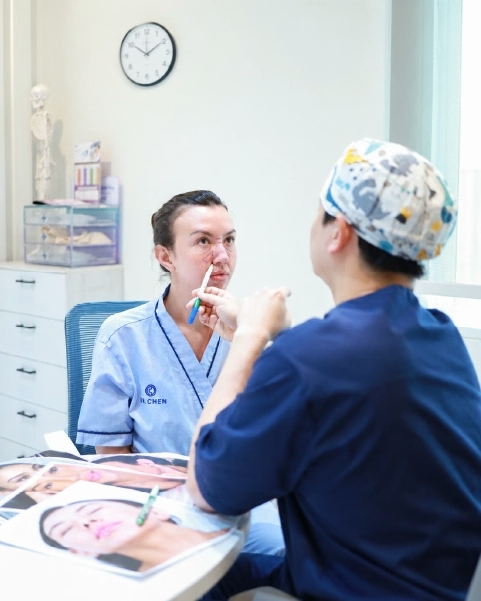
Nose Assessment With A Doctor At DCH Hospital

Cost And Travel Planning

Prepare For Your Procedure, Your Stay And The Journey Home. Explore The Details To Confirm With DCH Before You Book.

DCH Hospital Transport Vehicle For A Planned Hospital Visit

Know What Your Quote Covers

Procedure And MaterialsRequest A Written, Itemised Quote After Assessment. Confirm The Technique, Implant Or Graft, And Any Revision Work.

Care And Hospital FeesCheck Surgeon, Anesthesia And Facility Fees, Tests, Medicines, Follow-Up And Any Overnight Stay.

Possible Extra CostsAsk What Is Excluded And How Additional Care Or Further Treatment Would Be Charged.

View Nose Surgery Prices And Packages. Confirm Current Inclusions And Suitability With DCH.

Your DCH Medical Team

Meet The Doctors Available For Nose Surgery Consultations At DCH. Explore Their Backgrounds And Discuss Your Goals, Treatment Options And Care Plan.
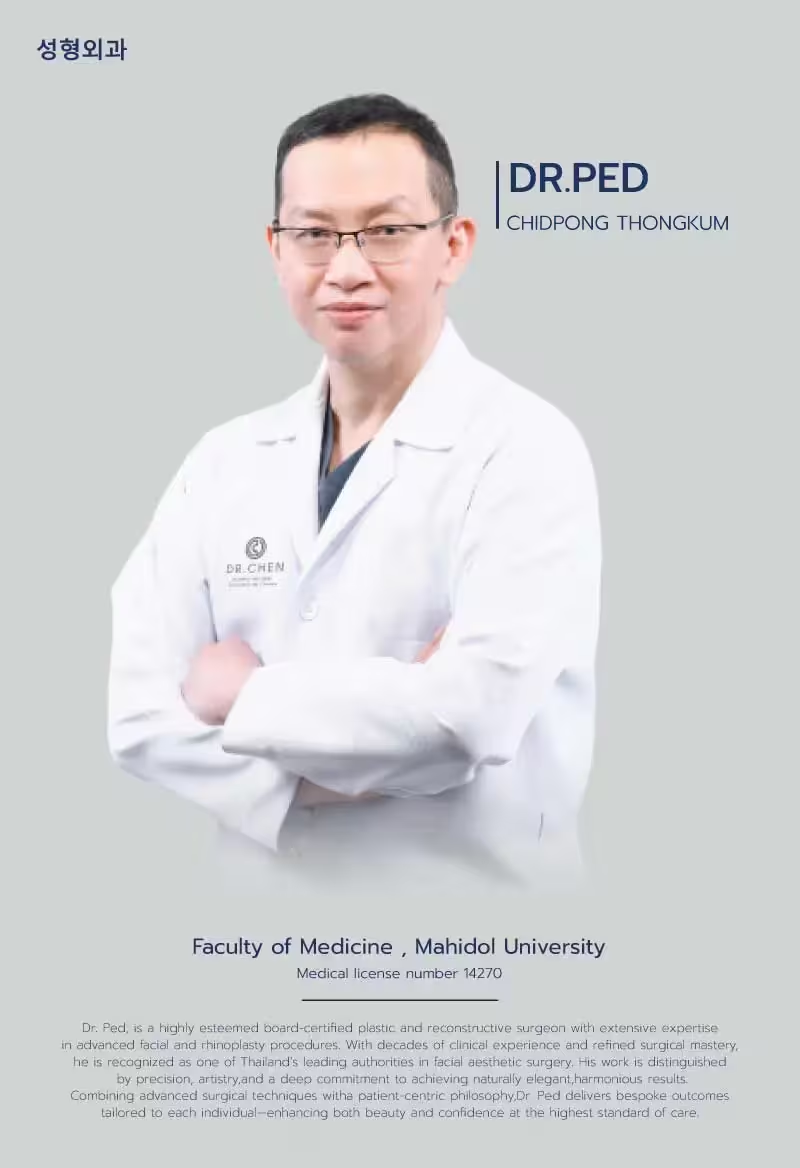
Dr. Chidpong Thongkum (Dr. Ped)

Dr. Chidpong Thongkum

Dr. Ped · Physician At DCH Hospital

Recognised Specialties In ENT And Family Medicine, With A Subspecialty In Facial Plastic And Reconstructive Surgery. Consultation Areas Include Rhinoplasty And Facial Surgery. Thai Medical Licence No. 14270.

View Dr. Ped’s Profile

Dr. Chen Chaicharncheep

Dr. Chen Chaicharncheep

Founder And Physician At DCH Hospital

Recognised Specialty In Orthopaedics. Consultation Areas At DCH Include Nose Surgery, Which Is Separate From His Recognised Specialty. Thai Medical Licence No. 51245.

View Dr. Chen’s Profile

Your Consultation Should Clarify Who Will Perform Your Surgery, The Proposed Technique And How Your Recovery And Follow-Up Will Be Managed.

Meet The Full Medical Team


Nose Surgery FAQs

DCH Hospital is an aesthetic surgery hospital in Bangkok, founded by Dr. Chen Chaicharncheep. The medical team assesses your concerns and discusses suitable options, expected benefits, limitations, risks and aftercare. Your treating clinician and care plan are confirmed during consultation.

General Link

Contact Us

Dr.Chen Surgery Hospital International (Head Office)
No. 216 Ramkhamhaeng Road, Rat Phatthana Subdistrict, Saphan Sung District, Bangkok 10240
Info@drchenhospital.com

Follow Us

Language

ENTH
Copyright © 2026 DCH Hospital. All Rights Reserved.